

History and philosophy have been my reading diet for years. This year the Vedic side pulled, and one concept stopped me cold: varna.
Varna is Sanskrit, literally “color” or “quality”. In the old Vedic model there are four of them: shudra the worker, kshatriya the warrior, brahmana the sage, vaishya the merchant. Centuries later the idea hardened into hereditary castes, and that’s the version most people know. I don’t think it was stupid. It was convenient: the people who froze the ladder were the ones already standing on top. But locking a person’s ceiling at birth kills the entire point of the model. The original is something else entirely: a map of what actually drives a person.
Read it next to modern psychology and it’s hard not to smile: a motivation theory, with stages of personal growth built in, written a couple of few years before Maslow drew his pyramid.
Each varna has a high register and a low register, and that’s the part most retellings skip.
The worker wants security. Salary, stability, clear tasks. At his best he’s a master: Stradivari claimed even God couldn’t build a violin better than his. At his worst he does the minimum not to get fired, blames the government, the economy, the boss, and dreams of retiring to a beach with a coconut. His growth lever is one word: responsibility.
The warrior wants victory. Territory, control, being the one who decides. At his best he’s the backbone of everything: pull warriors out of a society (army, police, firefighters) and it collapses within the hour. No pyramid was ever built by workers holding a meeting. At his worst he’s a tyrant: total control, nothing moves without his permission. His growth lever: discipline pointed at building, not conquering.
The sage wants truth. Understanding, and passing it on. At his best he’s a scientist, endlessly upgrading his picture of the world. At his worst he’s a propagandist: an intellect sharp enough to prove black is white, selling dogma by the hour. His lever is honesty: with the facts, and with himself.
The merchant wants growth. Systems, capital, things that compound. At his best he multiplies resources and distributes them, giving ideas the fuel they need to exist. At his worst his desires are infinite, and a man who always needs more is poor at any net worth. His lever: generosity.
The part that hooked me: you don’t get assigned one for life. You climb.
I checked the ladder against my own biography. It maps uncomfortably well.
The worker rung started for me before any real job. As a teenager I skipped school to make money on a labor job. My father found out and was furious. Then, after the scolding, he asked one question: did you do the work well? I said yes. And he praised me. That stuck for life: if you do something, do it well. Not for praise, not to get it over with. Well. So by my first real jobs, responsibility was already installed - parents and sport had done it before any employer could.
Then Russia, my twenties and thirties. A tech startup. A transport company that grew to 350 employees. A construction firm. And more ventures around them: I kept opening businesses because more was the whole point. Some grew. Some collapsed. I was spread across all of them at once. On paper, business. In psychology, pure warrior. More routes, more market share, more territory. Growth was the only scoreboard, and the goal was honest and simple: earn more. I never became the tyrant from the low register, but I lived on that rung for years (ask anyone who has managed 350 drivers). Sport saved me here in a second way: it brought discipline, and discipline leaked into every other area of life. A warrior without discipline is just aggression with a schedule.
The warrior didn’t end with some elegant insight. It ended at a trading terminal. After moving to Canada I sold the businesses and put the money to work: stocks, forex, crypto. The returns came. The meaning didn’t. Pure trading produces nothing - you’re taking money from traders who happened to be less sharp or less lucky that day. When that landed, it triggered the question that quietly ends the warrior: what if the point is not to earn more, but to make something good? Something people actually need.
For me the answer had a specific shape. People read less every year, and books are where the knowledge that moves us forward actually lives. Film is how meaning travels now, to where the attention went. One film calms someone down, another lights a fire, a third just entertains, which is also honest work.
Film was the old dream, the one that had been pulling at me even through the trading years. And here the ladder did something I didn’t expect: it sent me back to the bottom rung. New country, new language, new industry - so I became a worker again, this time on purpose. Production assistant. Grip crew. Driver. Electrician. Accounting. Actor. Every set position I could get into. I didn’t take those jobs for the paycheck. I took them to see the machine from inside: how a set runs, who decides what, where the money leaks, where I could do it better. My father’s question rode along on each one: did you do the work well? Well enough that people kept calling with shifts years after I’d moved on to producing.
That detour was my film school, and it opened the sage rung. I watched the best people on set and absorbed everything they did. English on top of it all. Then reading followed: the business of film, psychology, and lately, as you can tell, Indian philosophy. The questions changed from “how do I win” to “what is actually true here”. I won’t pretend I’ve finished this rung. I’m in the middle of it, and I suspect the middle is where you stay.
The classic model puts the sage on top. In my reading, there is no top. Each varna is infinite: a worker who loves his craft can go deeper into mastery his whole life and be below no one. Stradivari never needed to run an empire. The ladder isn’t a ranking, it’s a map of what drives you, and everyone picks the rung where they’re home. Mine turned out to be the sage and the merchant, and the merchant came last simply because that’s the order my life took.
In its high register, the merchant turns resources into fuel for ideas: truth, multiplied by capital, moved to projects that would die without it. That’s what producing films means to me now: finding capital and building systems so that stories aligned with my mission, the overview effect I wrote about earlier this week, actually reach the screen. Two films made, one sold to 40+ countries, investors repaid. Merchant craft in service of something bigger than the merchant. And honestly, I count myself early here: a small part of this rung walked, most of it ahead, on the merchant and the sage at the same time.
You never fully graduate a varna. I still train the worker’s responsibility, the warrior’s discipline, the sage’s judgment, the merchant’s generosity.
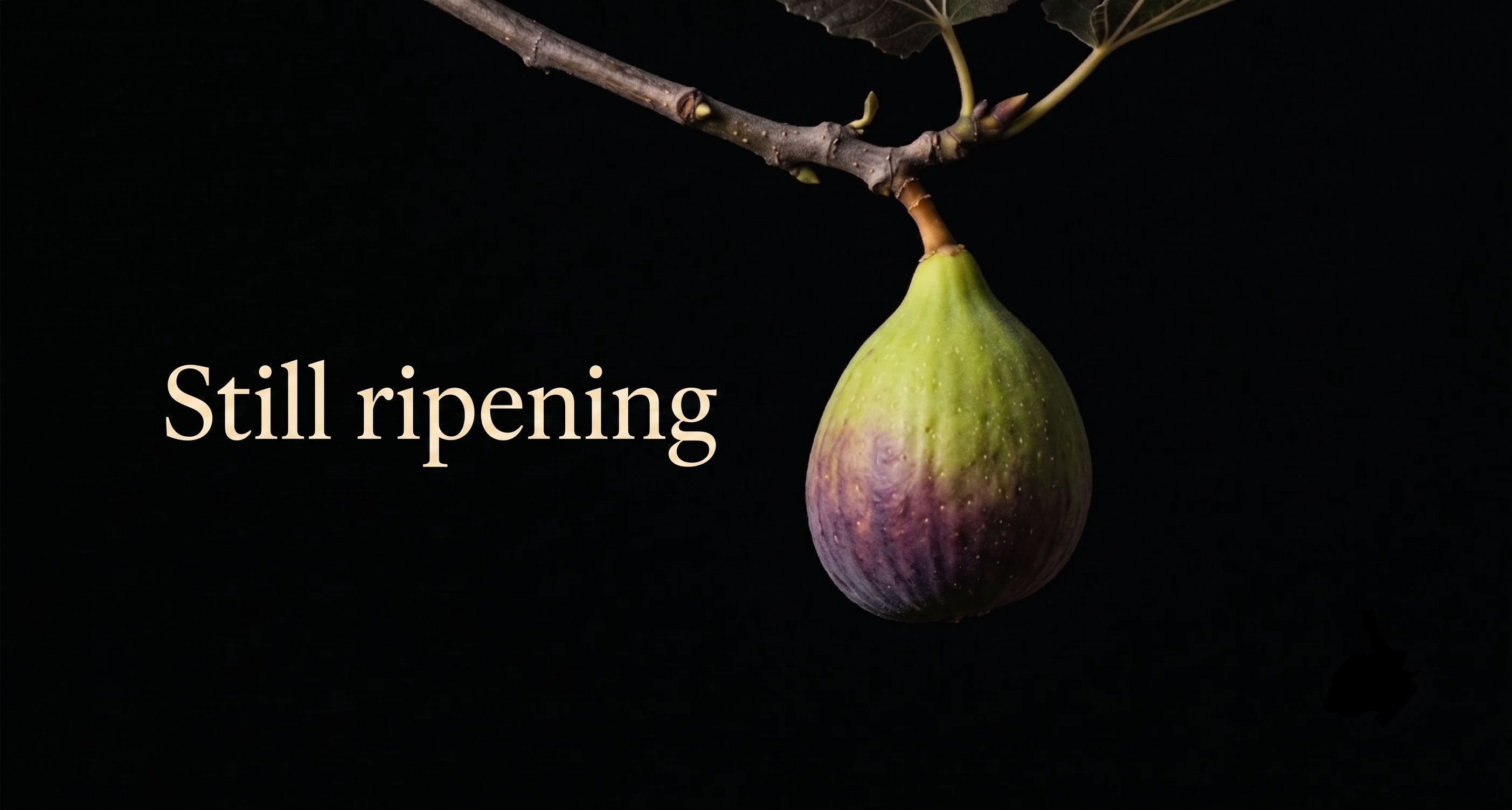
And you don’t get to pause. A fruit that stops ripening doesn’t stay where it is - it starts to rot on the branch. Ripening is the whole job, and a fruit ripens wherever it hangs: the worker’s rung, the merchant’s, any of them. The task is to be fully ripe by the time you’re picked. I’m nowhere near. Still climbing. Still ripening.